
Case study
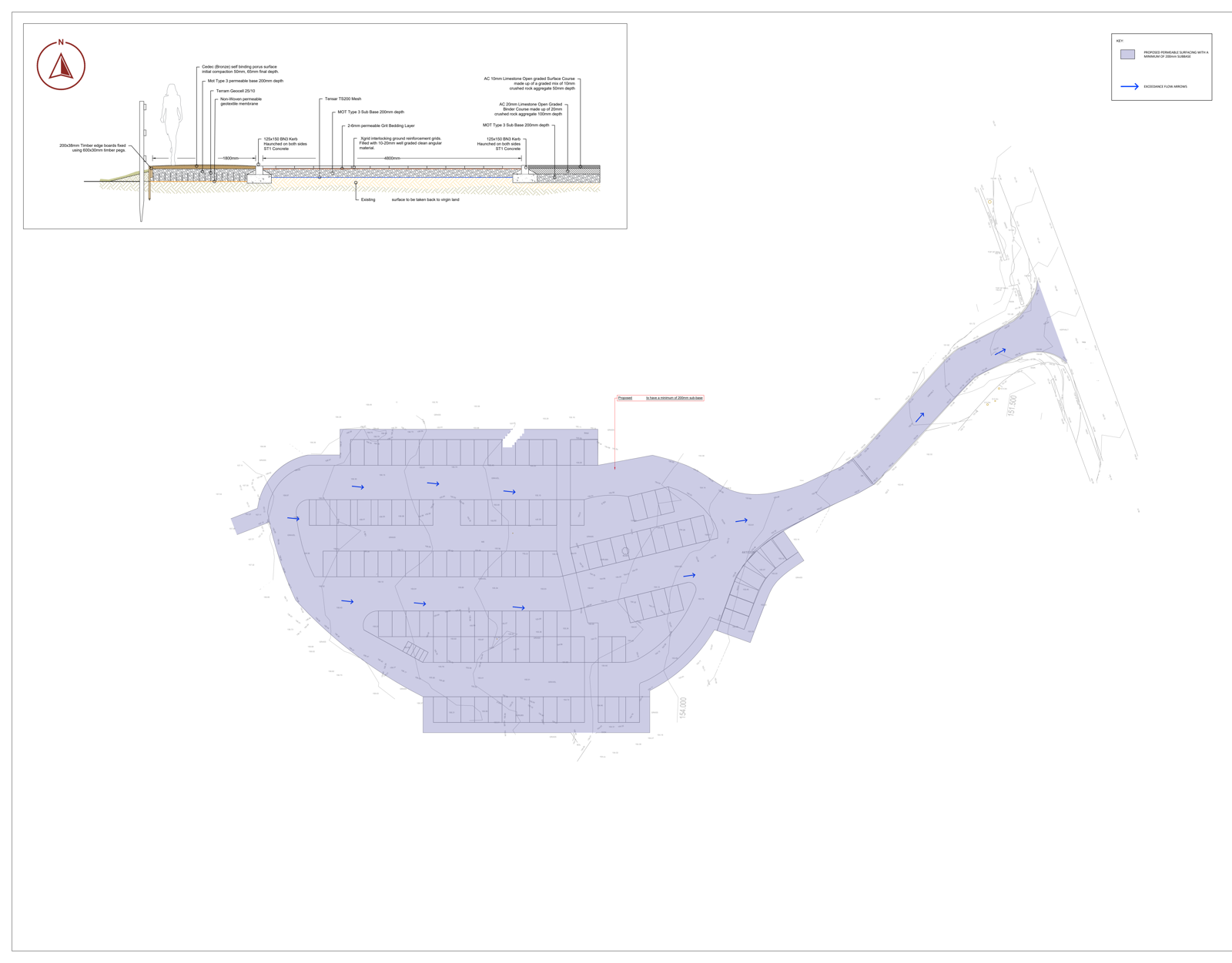
A drainage strategy for a car park in Leeds, prepared for planning and approved.
The constraint
The first question on any site is whether the ground will take water, because that decides whether the scheme is a soakaway or attenuation with a restricted discharge.
What we did
Surface water was discharged to the public sewer at a restricted rate agreed with the water company.
The numbers
| Climate change allowance, 1 in 30 year | 35% |
| Climate change allowance, 1 in 100 year | 45% |
| Management catchment | Aire and Calder |
The kind of condition this discharges
Wording differs between officers, but a scheme like this one is normally answering a condition along these lines:
No development shall commence until a detailed surface water drainage scheme, including the rate of discharge to the public sewer and written confirmation of the sewerage undertaker’s agreement to that rate, has been submitted to and approved in writing by the Local Planning Authority.
The restricted discharge rate and the storage sized to hold the difference are what answer this one. There is a fuller guide to discharging drainage planning conditions if you want to read up on the process.
Outcome
Hydraulic simulation showed no flooding in the 1-, 30- or 100-year storm events, including the climate change allowance. The scheme was approved at planning.
Every scheme in these case studies was approved, that is the point of the exercise. If you have a drainage condition to discharge, send us the wording and the site address and we will tell you exactly what is needed.
Browse the rest of our case studies, see what a drainage strategy involves, or find where we work.