
OUR SERVICES
Sustainable Drainage Strategy
Sustainable Urban Drainage System Design for Your Development
With an increasing emphasis on sustainability and environmental consciousness, Surface Water Drainage Strategies (commonly referred to as sustainable urban drainage system design or SuDS) have emerged as a paramount approach for managing surface water run-off in a way that aligns with ecological balance and community well-being. Here at Onn Point, our director and drainage design specialist Robert Smith boasts over 18 years of experience in complex drainage infrastructure design. As a result of his expertise, drainage strategy with Robert and our drainage design consultants is one of our most popular services.
A sustainable drainage strategy encompasses a spectrum of innovative techniques aimed at mitigating the adverse effects of rapid run-off, either by encouraging water infiltration into the ground or by controlled storage. As your go-to drainage design consultants, we offer:
Private Drainage Design
At Onn Point, we have extensive expertise in private drainage design, covering everything from initial planning to construction. Our skilled drainage design specialist team specialises in crafting drainage solutions tailored to each project’s unique requirements, seamlessly integrating functionality with sustainability.
Adoptable Drainage Design
We provide adoptable drainage designs that not only meet but surpass regulatory standards. Our meticulous approach ensures the S104 approval, demonstrating our commitment to excellence. From conceptualisation to execution, we oversee the transformation of a sustainable drainage strategy into tangible infrastructure.
Drainage Maintenance Strategies
Our drainage design consultants are dedicated to holistic urban development and offer comprehensive drainage maintenance strategies. We understand the critical link between effective maintenance and the longevity of drainage systems. Our highway drainage design frameworks enhance system efficacy and support seamless planning applications.
Percolation Tests
Our services include percolation tests that go beyond conventional assessments. We conduct tests for Foul and Surface Water B365, delivering a comprehensive evaluation that provides a deep understanding of water permeability and its implications for sustainable drainage solutions.
Flood Risk Assessments
For developments exceeding a hectare in flood zone 1 or located in flood zones 2 and 3, Flood Risk Assessments are integral to the planning process. Our expertise guides you through the intricacies of these assessments, ensuring informed decision-making to mitigate potential flood risks.
Soakaway / Field Drain Design
We excel in the precise science of sizing soakaways and foul field drains. With meticulous attention to detail, our soakaway calculations go beyond numbers, emphasising hydraulic efficiency, ecological equilibrium, and sustainable urban development.
How does a Sustainable Drainage Strategy work?
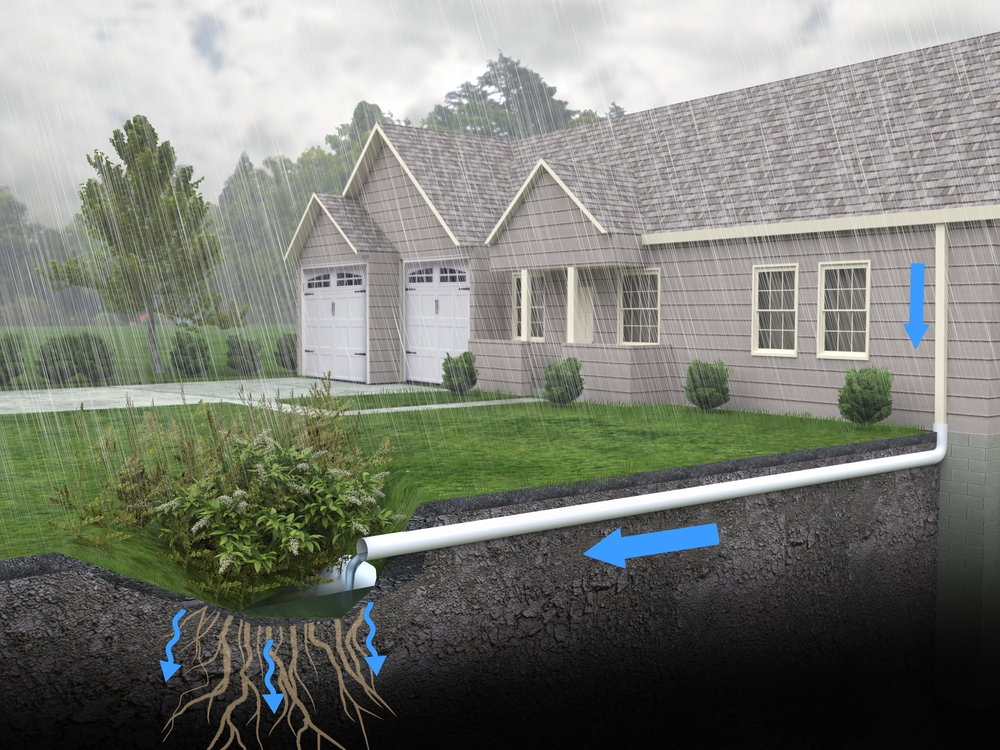
A sustainable drainage strategy (SuDS) design encompasses a comprehensive approach to managing surface water runoff, aiming to mitigate environmental impact, minimise flooding risk, and enhance water quality.
Integrated with urban design, a SuDS report prioritises water quality improvement and incorporate maintenance strategies, ensuring adherence to regulatory standards.

Benefits of a Sustainable Urban Drainage System Design with Onn Point
- Flood risk reduction
- Crafted by specialised drainage design consultants
- Biodiversity enhancement
- Complex projects specialists
- Improved water quality
- Sustainable land use
- 18+ years’ experience
- Ground testing
OUR WORK
Client Reviews
We are incredibly proud of our customer feedback please read some of our testimonials below.



 Trustindex verifies that the original source of the review is Google.
  Trustindex verifies that the original source of the review is Google.
  Trustindex verifies that the original source of the review is Google.
  Trustindex verifies that the original source of the review is Google.
  Trustindex verifies that the original source of the review is Google.
  Trustindex verifies that the original source of the review is Google.
  Trustindex verifies that the original source of the review is Google.
  Trustindex verifies that the original source of the review is Google.
  Trustindex verifies that the original source of the review is Google.
  Trustindex verifies that the original source of the review is Google.
 What is drainage design?
Drainage design is the process of creating a plan for managing water flow in a specific area. This includes determining the type of drainage system that will be used, as well as the location and size of drainage structures such as inlets, pipes, and outfalls. Drainage design using a drainage design specialist team is an important step in the development of any project, as it helps to prevent damage to buildings and infrastructure, and protects the surrounding environment.
There are several factors that must be considered when designing a drainage system. The first is the type of soil and the slope of the land. This information is used to determine the rate at which water will flow through the soil and how quickly it will infiltrate. The second factor is the amount of rainfall that the area typically receives. This information is used to determine the size of the drainage system that will be required.
The next step in the drainage design process is to determine the type of drainage system that will be used. There are several different types of drainage systems, including surface drainage systems, subsurface drainage systems, and a combination of both. Surface drainage systems are designed to carry water away from a surface, such as a roadway or a parking lot. Subsurface drainage systems are designed to carry water away from an area below the surface, such as a basement.
Once the type of drainage system has been determined, the location and size of the drainage structures must be determined. Drainage structures include inlets, pipes, and outfalls. Inlets are designed to collect water from the surface and transport it to the drainage system. Pipes are used to carry water away from the site. Outfalls are the point where the water is discharged from the drainage system.
It is important to note that the design of drainage systems should be in accordance with local regulations and guidelines. Drainage design should be done by qualified and experienced drainage design consultants. The design should also be reviewed by a team of experts that includes engineers, hydrologists, and environmental scientists.
Private Drainage Design: Your Custom Key to Sustainable Infrastructure
Private drainage design is everything inside your site boundary that a water authority will not adopt: the pipes, storage and flow controls that take surface water and foul flows to a point of discharge. It is sized around your ground, your levels and the discharge rate your lead local flood authority will allow, which is why two sites a mile apart rarely end up with the same scheme. Done well, nobody ever notices it. Done badly, it is the reason an application stalls and a layout has to be redrawn late, when changing it costs the most.
Why Do We Need Sustainable Infrastructure?
Because the planning system now requires it, and because the ground decides what is actually possible. Any development of ten or more units has had to consider SuDS as part of a drainage strategy since April 2015, and every scheme has to work down the drainage hierarchy in order, showing why each option above the one chosen was ruled out:
- Infiltration: a soakaway or infiltration basin, where the ground will take it
- Discharge to a watercourse, usually at a restricted rate
- Surface water sewer, where one exists and has capacity
- Combined sewer: a last resort, and increasingly refused outright
Whether you get to stop at the first is settled by a percolation test to BRE 365, not by preference. Where the ground will not take it, which is much of England, the scheme becomes attenuation: storage sized for the critical storm, a flow control set to the rate the authority will allow, and treatment stages appropriate to what the water has run over. Done well that is basins, swales and permeable surfacing doing visible work, rather than a tank buried under a car park. On most sites sustainable drainage is not an addition to the design. It is the design.
How does Drainage Design work with Onn Point?
Adoptable Drainage Design
With Onn Point, expect more than just meeting standards: we set the bar higher. From navigating the regulatory landscape to overseeing construction with SuDS reports and more, our team ensures every facet of your drainage design adheres to the highest quality and compliance standards. With us, your project isn’t just built; it’s built to last.
Drainage Maintenance Strategies
Behind every successful drainage system, including drainage systems for highway design, lies effective maintenance. Our comprehensive strategies ensure the long-term health and functionality of your infrastructure. Whether it’s routine inspections or emergency response plans, we’ve got you covered at every turn to make sure your system remains resilient and reliable.
Percolation Tests
Gain a deep understanding of water permeability with our percolation tests. These assessments inform sustainable drainage solutions, minimising flood risks and safeguarding natural ecosystems. With our expertise, rest assured that your drainage system is designed with care and precision.
Flood Risk Assessments
Navigating flood-prone areas requires informed decision-making. Our flood risk assessments provide essential insights to mitigate potential risks to ensure your project is safe and resilient. With our guidance, you can confidently navigate flood zoning regulations to secure the future of your development.
Soakaway / Field Drain Design
Our expertise in soakaway and field drain design ensures your system is both effective and environmentally sound. With a focus on hydraulic efficiency and ecological balance, we create soakaway design solutions that support sustainable urban development and community resilience.
Hydraulic Modeling
Hydraulic modeling is a process used to simulate the flow of water in a drainage system. It is a powerful tool that can be used to predict the performance of a drainage system under different conditions and to identify potential problems. The model can also be used to evaluate different design options and to select the best solution. There are several types of hydraulic models that can be used for drainage design, including steady-state models and dynamic models. Steady-state models are used to predict the performance of a drainage system under steady-state conditions, such as a steady rainfall event. Dynamic models, on the other hand, are used to predict the performance of a drainage system under variable conditions, such as a changing rainfall event. One of the most commonly used models for drainage design is the Storm Water Management Model (SWMM). This is a dynamic model that simulates the flow of water through a drainage system and can be used to evaluate different design options. It can also be used to predict the performance of a drainage system under different rainfall events and to identify potential problems such as flooding or erosion. When using hydraulic models, it is important to have accurate data on the drainage system, including information on the topography, land use, and soil properties. The model should also be calibrated to match the observed data, such as rainfall and discharge measurements.
See a real drainage strategy
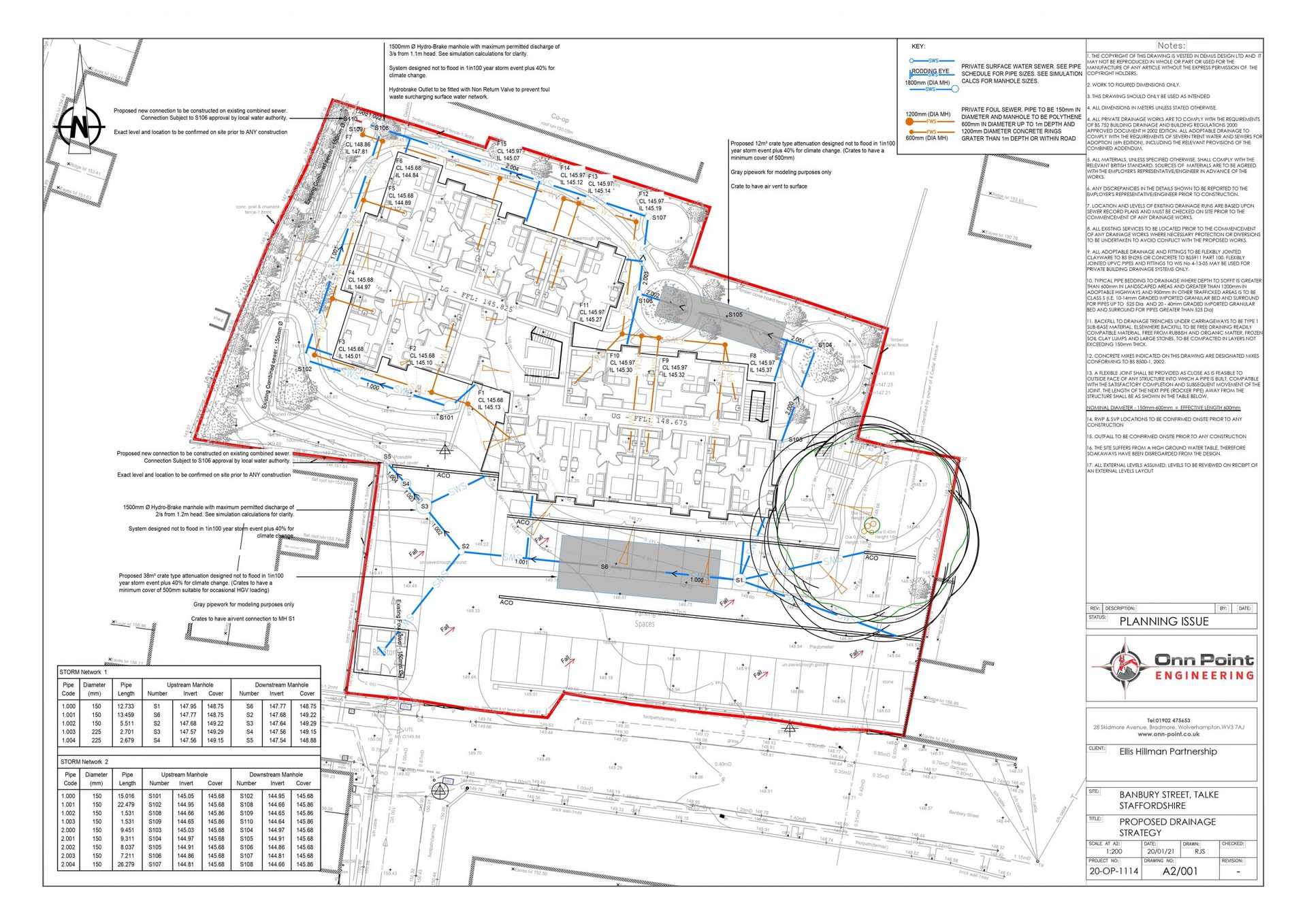
A drainage strategy we prepared for an 18 property development. It sets the greenfield runoff rate, sizes about 190m³ of attenuation for the 1 in 100 year storm plus 45% climate change, provides it in tanked permeable paving and attenuation crates, and limits the discharge to the sewer through a flow control. The drainage layout and the hydraulic simulation results are appended.
An attenuation pond design drawing: the pond in plan, cross sections and a long section with existing and earthwork levels, the inlet and outlet headwalls, and the pipe runs connecting to it.
Frequently asked questions
Do I need a drainage strategy for my planning application?
Most new developments do. If your application creates additional impermeable area (new dwellings, extensions, hardstanding) the local planning authority will normally want to see how surface water and foul water are dealt with before granting permission, or will impose a condition requiring it before you start on site.
How long does a drainage design take?
That depends on the site. We will give you a programme when we quote, once we have the survey information and any percolation results. Larger schemes, or sites needing agreement with the lead local flood authority or the water company, take longer because the approval sits outside our control rather than because the design does.
What do you need from me to start?
A site location plan, the proposed layout, and the planning reference or the wording of the condition being discharged. If a topographical survey and percolation test results exist, send those too. If they do not, we will tell you which are actually needed rather than ordering everything as standard.
What is the difference between foul and surface water drainage?
Foul drainage carries wastewater from toilets, kitchens and bathrooms to the public sewer or a private treatment system. Surface water is rainwater from roofs and paving. They must be kept separate on new development, and misconnecting one to the other is a common and expensive fault we find on redevelopment sites.
What happens if my site cannot drain to a soakaway?
Infiltration is the first option in the drainage hierarchy, but clay soils, a high water table or shallow rock can rule it out. The strategy then moves to attenuation, storing the water and releasing it at a controlled rate to a watercourse or sewer, at a rate agreed with the lead local flood authority.
Do you deal with the lead local flood authority?
Yes. The LLFA is a statutory consultee on major development in England and sets the local standards your design has to meet, including the discharge rate you will be allowed. We correspond with them directly and handle their comments.
If your scheme discharges to a ditch, brook or culvert, you may also need ordinary watercourse consent: a separate consent from planning that is easy to miss.
Tell us about your site
Send us the site address and the condition wording, or the planning reference, and we will tell you exactly what is needed. If you do not need us, we will say so.