
Before a soakaway can be designed, you need to know how fast water actually drains into the ground on your site. That figure comes from a percolation test, and without it a soakaway cannot be sized, justified to the planning authority, or relied on to work.
Onn Point designs the drainage. The testing itself is carried out by our sister company, PT (West Midlands) Ltd, which does nothing else — so you get a specialist crew on site and a design team that knows exactly what to do with the results.
What a BRE 365 test measures
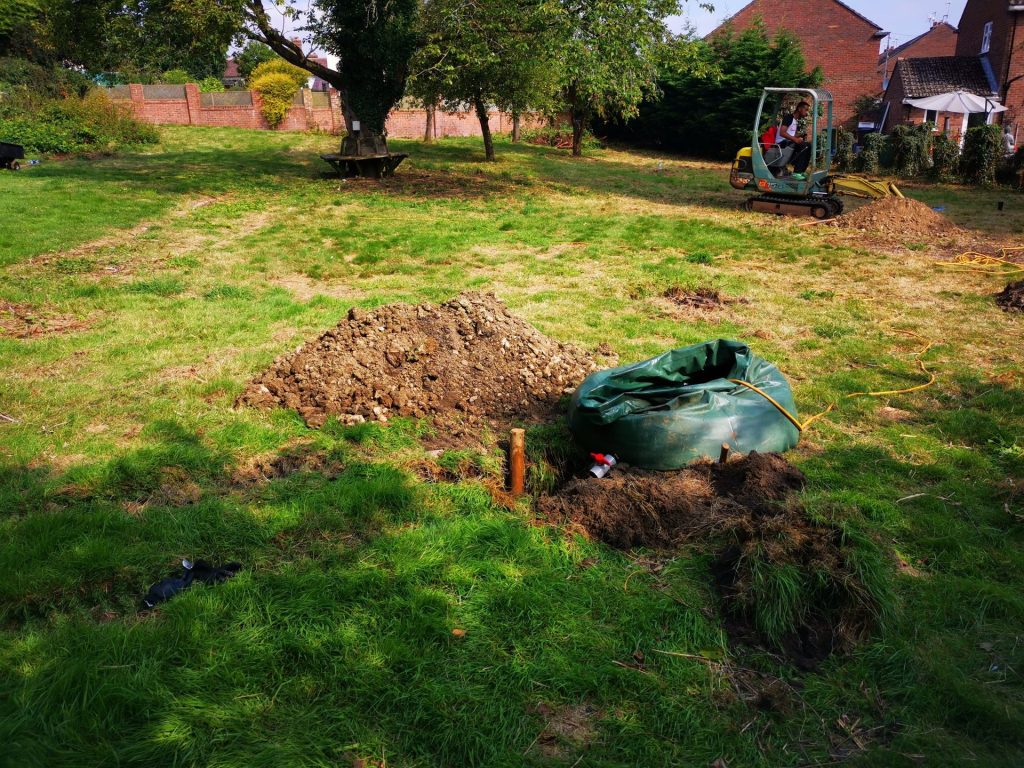
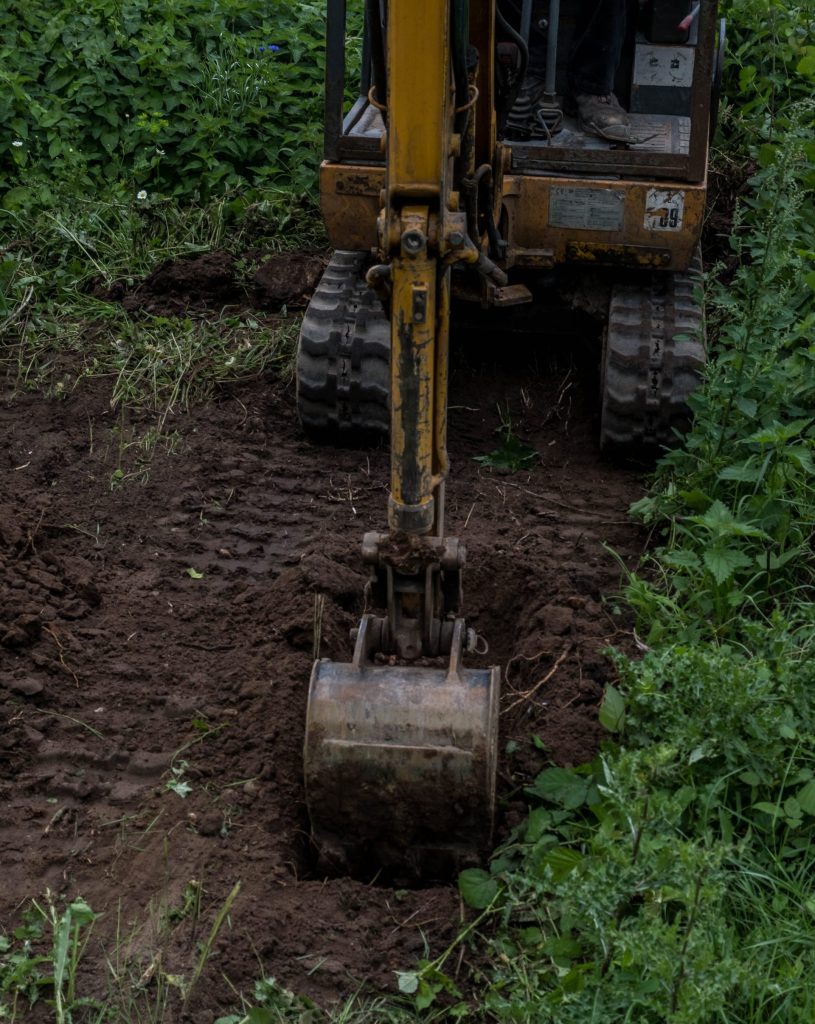
BRE Digest 365 is the standard method for measuring soil infiltration in the UK, and it is what local authorities expect to see behind a soakaway design. A trial pit is excavated to the depth the soakaway will occupy, filled with water, and the time taken for the level to fall from 75% to 25% of the effective storage depth is recorded. The test is repeated three times in the same pit, and the slowest of the three runs is used — so the design is based on the worst case rather than a flattering one.
The result is an infiltration rate, usually written as a soil infiltration value in metres per second. That single figure drives everything downstream: the storage volume the soakaway needs, its footprint, its depth, and whether infiltration is viable on the site at all.
When infiltration does not work
Not every site can drain to ground. Clay soils, a high water table, shallow rock or contaminated ground can all rule a soakaway out, and a test that returns a very slow rate is a useful result rather than a wasted one — it tells you to design for a different outcome before you have committed to a layout.
Where infiltration is not viable, the drainage strategy moves to attenuation and a controlled discharge to a sewer or watercourse, with the discharge rate agreed with the lead local flood authority. That is drainage design work, and it is what we do.
How the test fits into a planning application
On most developments the percolation test is not the deliverable — the drainage strategy is. The test provides the evidence that sits underneath it. A typical sequence runs:
- Trial pits dug and BRE 365 testing carried out on site
- Infiltration rate calculated and reported
- Soakaway or attenuation sized against the rate, the contributing area and the required return periods
- Drainage strategy drawn up and submitted to discharge the planning condition
If you already hold test results from another consultant, we are happy to design from those. If you do not, arranging the testing through PT keeps the whole chain with one point of contact.
Related reading
- How to calculate soakaway size
- BRE Digest 365 and soakaway design
- The science of soakaway calculations
- Drainage design
What is Percolation Testing?
When designing Sustainable Urban drainage systems, engineers must first consider the discharge of surface water from impermeable areas into the ground in line with National Planning Practice Framework NPPF. Although it is possible to carry out desktop studies that will highlight if infiltration is feasible, on-site testing should be carried out to confirm this prior to construction, this is known as percolation testing or infiltration testing.
The Percolation Test Procedure
Surface water infiltration testing should be carried out in accordance with BRE365 soakaway testing:
- The trial pit should be excavated at the same depth of the proposed SuDS report feature
- The trial pit should be 1m to 3m long, 0.3m to 1m wide and should have vertical sides and if required filled with granular material for stability.
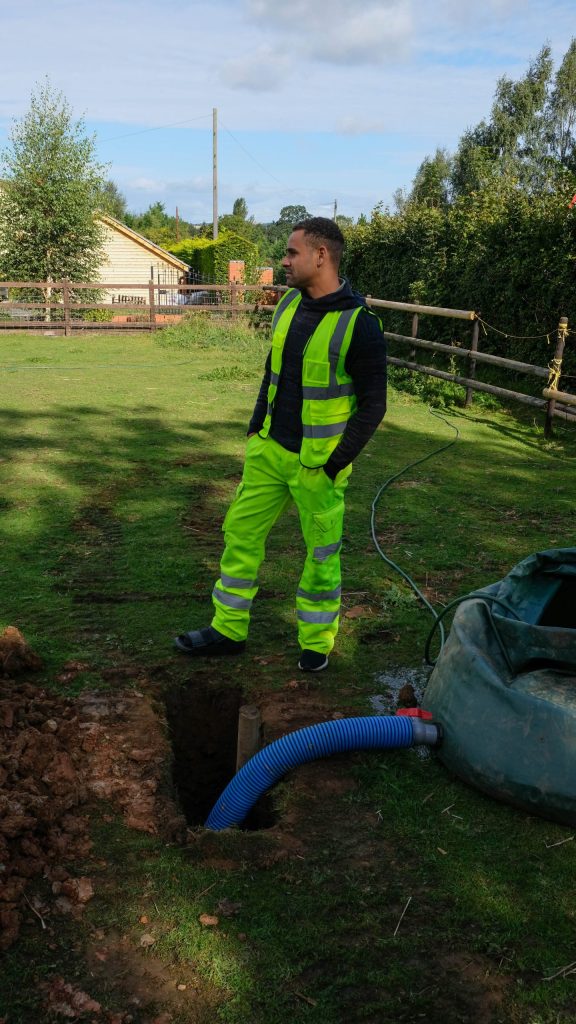
- A lot of water will be used to determine the soil infiltration rate so a water bowser may be needed. The inflow should be rapid so that the pit can be filled to its maximum effective depth in a short time. Take care that the inflow does not cause the walls of the pit to collapse and empty. Each time, record the water level and time from filling, at intervals sufficiently close to clearly define water level versus time.
- The soakaway test should be repeated at least three times, the three fillings should be on the same or consecutive days.
Documenting the Test
It’s crucial to maintain detailed records of the percolation test, as this information will be required when applying for planning permission and demonstrating compliance with BRE365. Ensure your documentation includes:
- The location of the test site
- Date and time of the test
- Depth and dimensions of the trail pit
- Measurements of water level and percolation rate
- Any other relevant observations
- Don’t forget to take pictures
Infiltration Rates
Once the raw data has been recorded the times taken for the water level to fall from 75% to 25% can then be used to calculate the soil infiltration rate. Infiltration rates are required to size soakaway storage volumes based on the impermeable area. Percolation tests are a critical aspect of designing sustainable drainage systems in line with BRE365 guidelines. You can assess the suitability of the soil for soakaway designs and help contribute to effective surface water management, reducing the risk of flooding and protecting the environment. If you would like to discuss infiltration testing or any drainage related matters on your site such as soakaway calculations, or if you’re in need of a drainage strategy, please feel free to contact us.
Frequently asked questions
What is a BRE 365 percolation test?
It is the standard UK method for measuring how quickly water soaks into the ground. A trial pit is dug to the depth the soakaway will occupy, filled with water, and the time taken for the level to fall from 75% to 25% of the effective storage depth is recorded. The test is repeated three times and the slowest run is used.
How long does testing take on site?
Usually a day, sometimes two where the ground drains very slowly, because each pit has to be tested three times and a slow pit takes a long time to empty. Testing is carried out by our sister company PT (West Midlands) Ltd.
Do I definitely need a percolation test?
You need one if a soakaway or any infiltration drainage is proposed, because the infiltration rate is the number the design is built on. If the site is already known to be unsuitable for infiltration, testing may not be worth the cost and the strategy moves straight to attenuation.
What if the results show the ground drains too slowly?
That is a useful result rather than a wasted one. It tells you before you commit to a layout that infiltration will not work, and the design moves to attenuation with a controlled discharge. Better to find out at test stage than after the drainage has been dug.