
Case study
A drainage strategy for 2 dwellings in Clitheroe, prepared for planning and approved.
The constraint
Infiltration testing on site confirmed the ground would not take water, so a soakaway was not an option. That ruled out the top of the drainage hierarchy and set the shape of everything that followed.
What we did
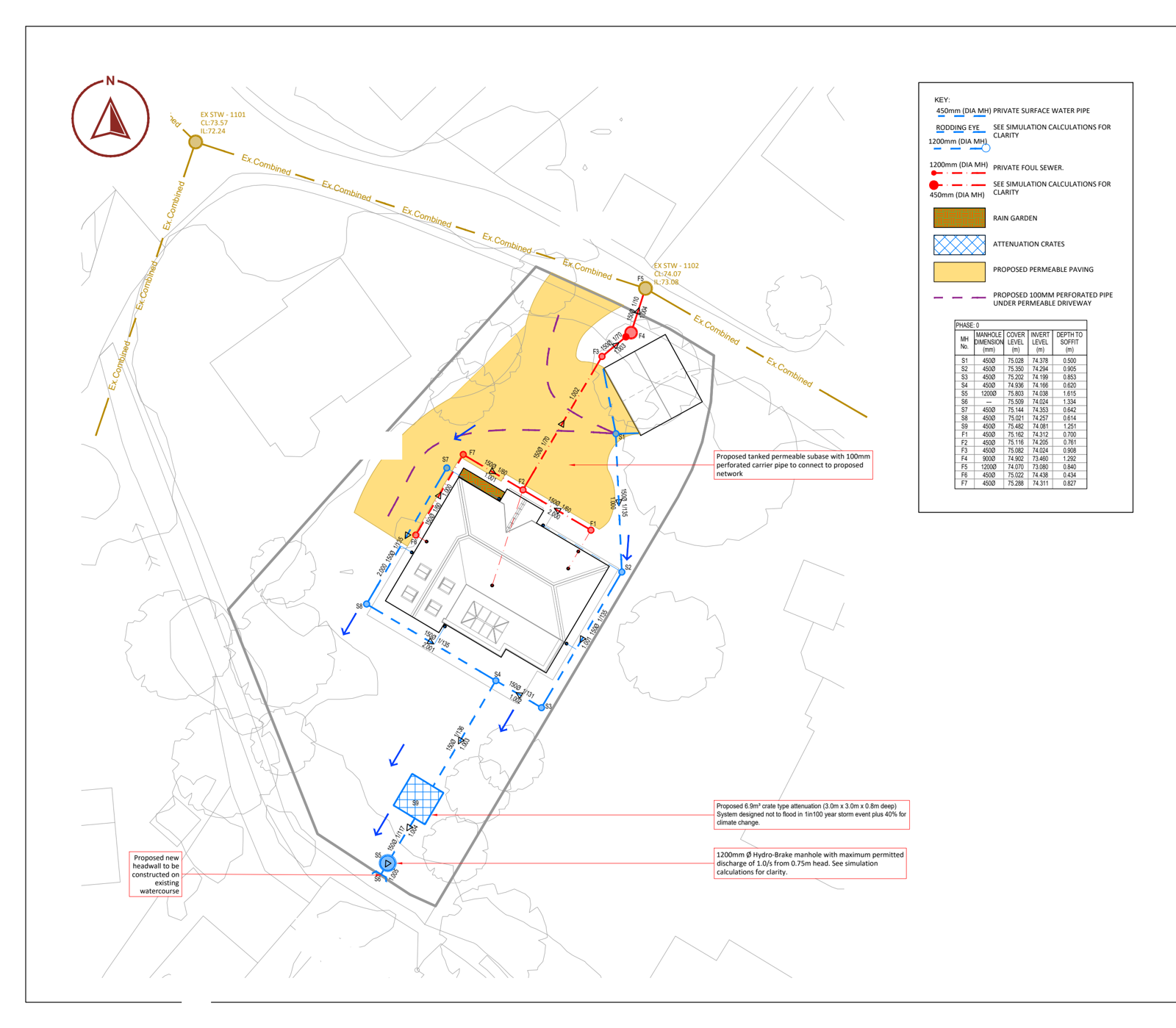
The scheme uses infiltration and permeable paving.
Attenuation storage of 5.5m³ was provided for the 1-in-100-year event including a 40% climate change allowance.
The numbers
| Discharge rate | 2 l/s |
| Attenuation storage | 5.5m³ |
| Climate change allowance, 1 in 30 year | 35% |
| Climate change allowance, 1 in 100 year | 40% |
| Management catchment | Ribble |
Every SuDS option, and why
Each option in the SuDS hierarchy was considered for this site. This is the assessment as it went into the report:
| Option | Used | Why |
|---|---|---|
| Rainwater Harvesting | No | The use of rainwater harvesting is not considered economically viable on this site considering installation and operational costs. |
| Green Roofs | No | Green roofs have not been proposed for this site as there is insufficient access to roof areas for maintenance and as such the system could not be effectively maintained to ensure long term performance. |
| Infiltration Systems | Yes | It is proposed that permeable surfacing be implemented to enable surface water run-off to discharge into the ground at greenfield rates. The use of soakaways have been discounted from the design due to the existing sewer easements running across the site. |
| Proprietary Treatment Systems | No | The use of proprietary treatment systems is not considered economically viable or required on this site considering installation and operational costs. |
| Filter Strips | No | Filter strips have not been considered the most effective proposal for this site due to the proposed site layout. |
| Filter Drains | No | Filter Drains have not been considered the most effective proposal for this site due to the proposed site layout. |
| Swales | No | Swales are not suitable for this scheme due to available space and proposed land use. |
| Bioretention Systems | No | Bioretention Systems have not been considered the most effective proposal for this site due to the lack of available landscape areas. |
| Porous Pavements | Yes | Porous paving should be considered to ensure the site meets necessary SuDS requirements. |
| Attenuation Storage | No | Due to the lack of impermeable area there is no sufficient need for Attenuation. |
The kind of condition this discharges
Wording differs between officers, but a scheme like this one is normally answering a condition along these lines:
No development shall commence until a detailed surface water drainage scheme, demonstrating that surface water will be restricted to greenfield run-off rates for all storm events up to and including the 1 in 100 year event plus an allowance for climate change, has been submitted to and approved in writing by the Local Planning Authority.
The greenfield run-off calculation and the attenuation volume are what answer this one. There is a fuller guide to discharging drainage planning conditions if you want to read up on the process.
Outcome
The scheme was approved at planning.
Every scheme in these case studies was approved, that is the point of the exercise. If you have a drainage condition to discharge, send us the wording and the site address and we will tell you exactly what is needed.
Browse the rest of our case studies, see what a drainage strategy involves, or find where we work.